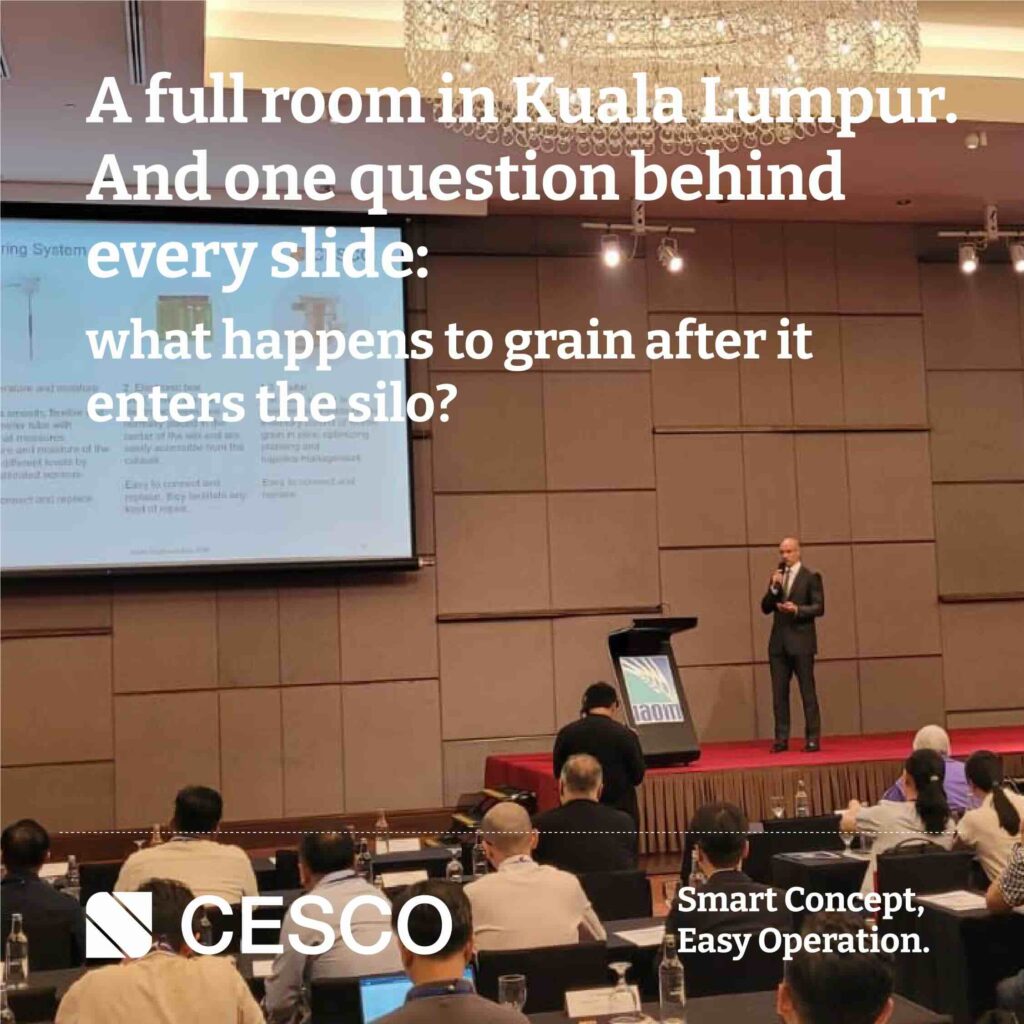
A full room in Kuala Lumpur. And one question behind every slide: what happens to grain after it enters the silo?
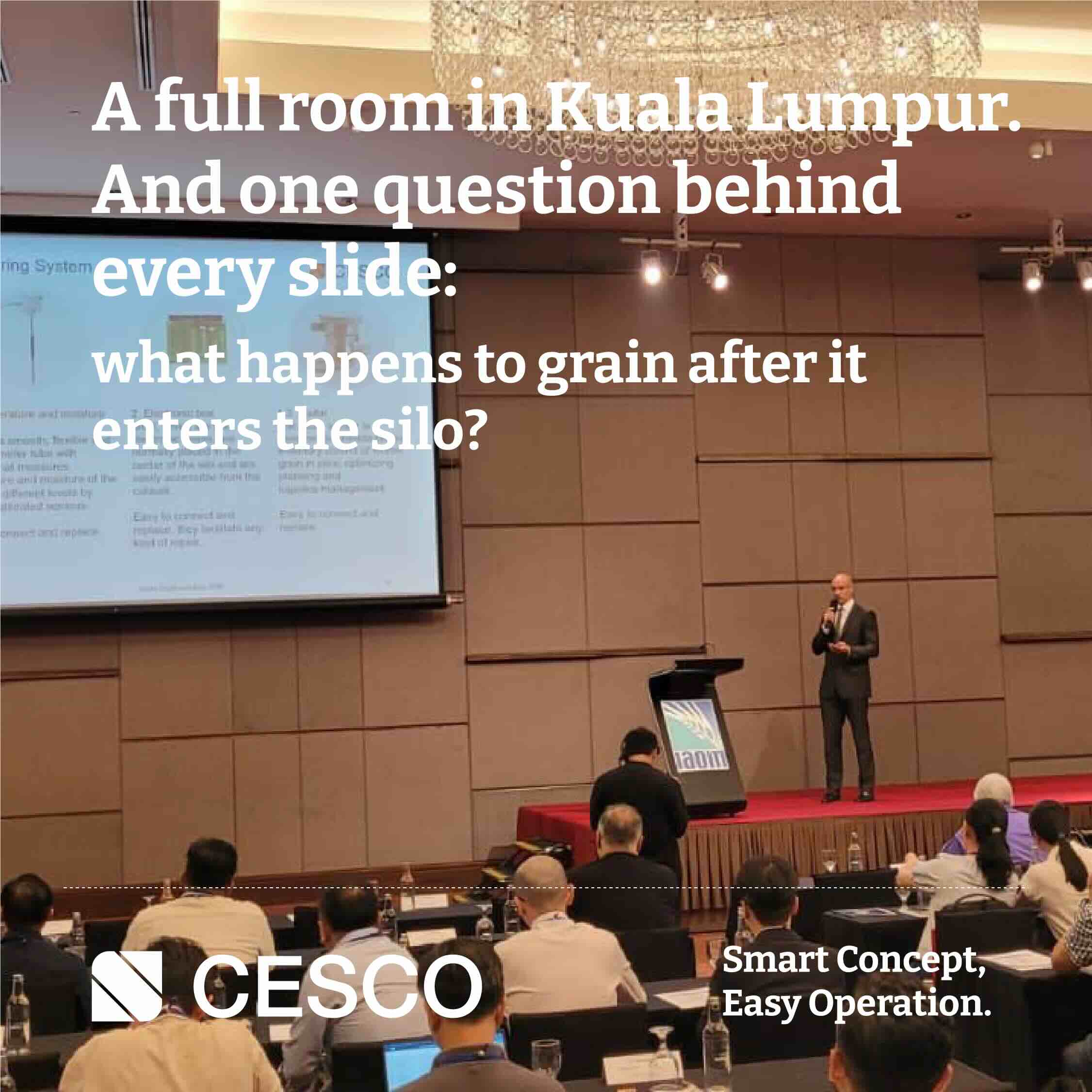
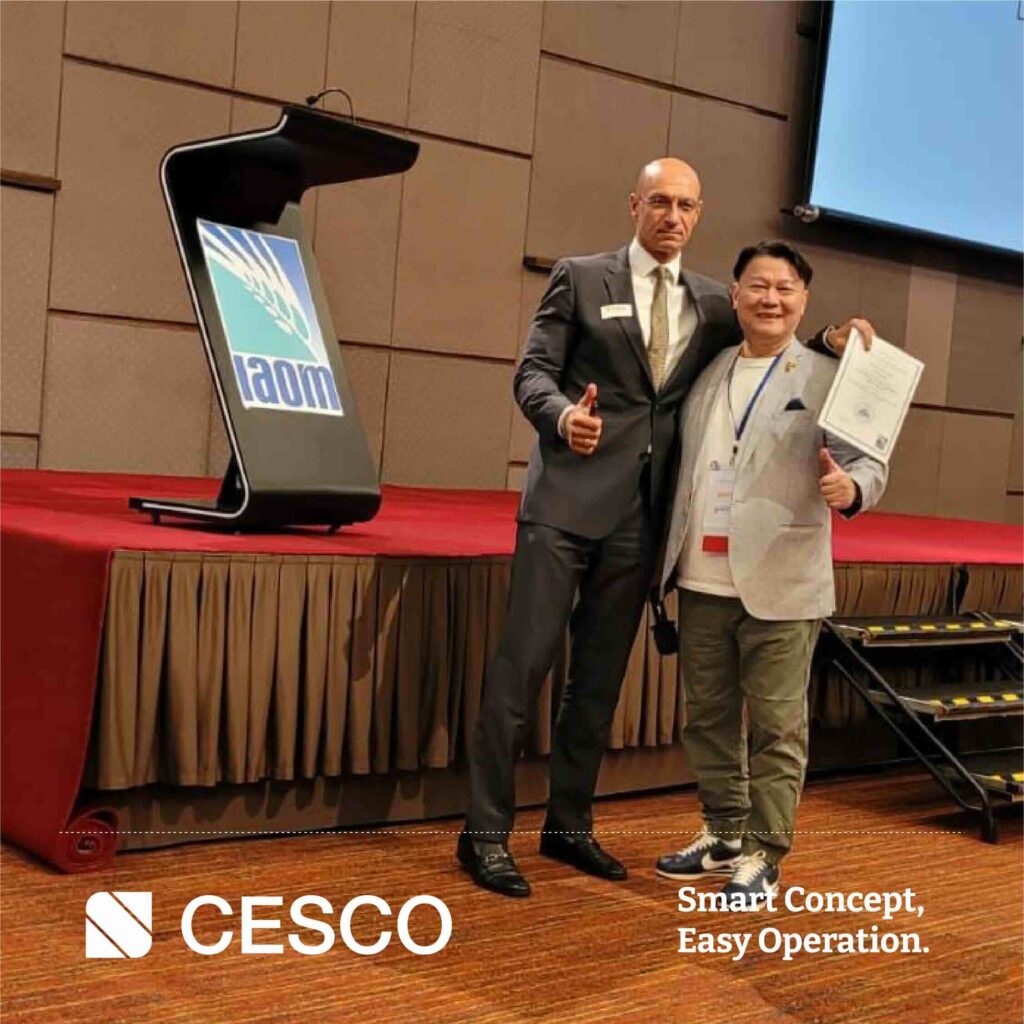
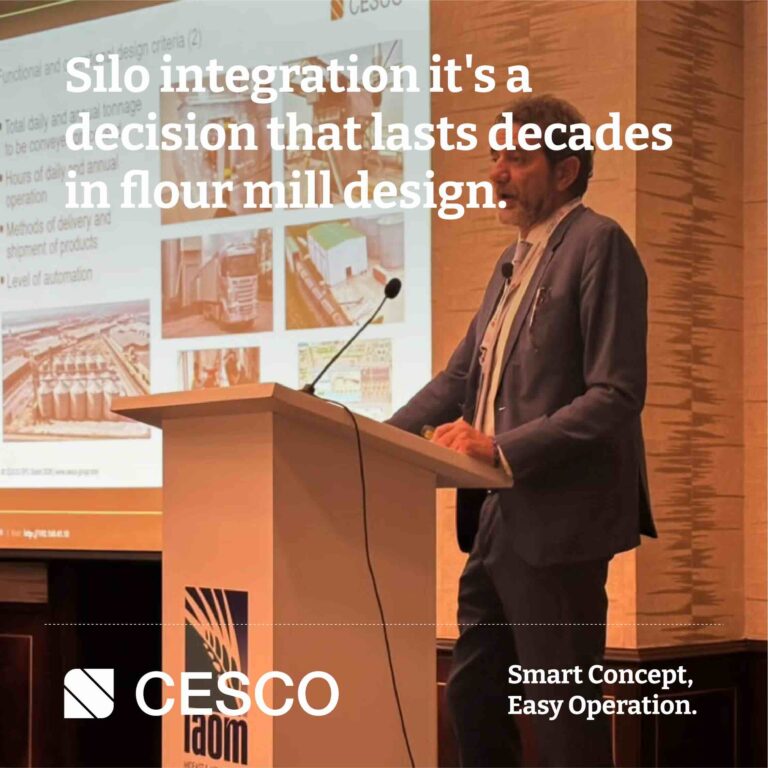
On Tuesday Oct 6th, Stefano Salardi of CESCO EPC spoke at the IAOM SEA Conference & Expo on “Integrated Silo and Equipment Design for Grain Quality, Energy Efficiency and Operational Resilience”.
One part of the session focused on a point that is often treated as an accessory: the monitoring system.
Stored grain does not announce a problem. Temperature rises slowly. Moisture migrates. By the time it is visible, quality is already lost. In long-term storage, that means lower nutritional value and lower market confidence in the product.
Stefano walked the audience through how monitoring is engineered into the silo from the start:
☑️ Temperature probes with several calibrated sensors, measuring the grain at different levels.
☑️ Combined temperature and moisture probes, for a complete picture of storage conditions.
☑️ Electronic boxes placed at the centre of the silo roof and accessible from the catwalk, so repairs do not require entering the silo.
☑️ Radar level sensors for precise inventory control, supporting planning and logistics.
Every component is designed to be connected and replaced easily. That detail matters. A monitoring system that is difficult to maintain is a system that eventually stops being used.
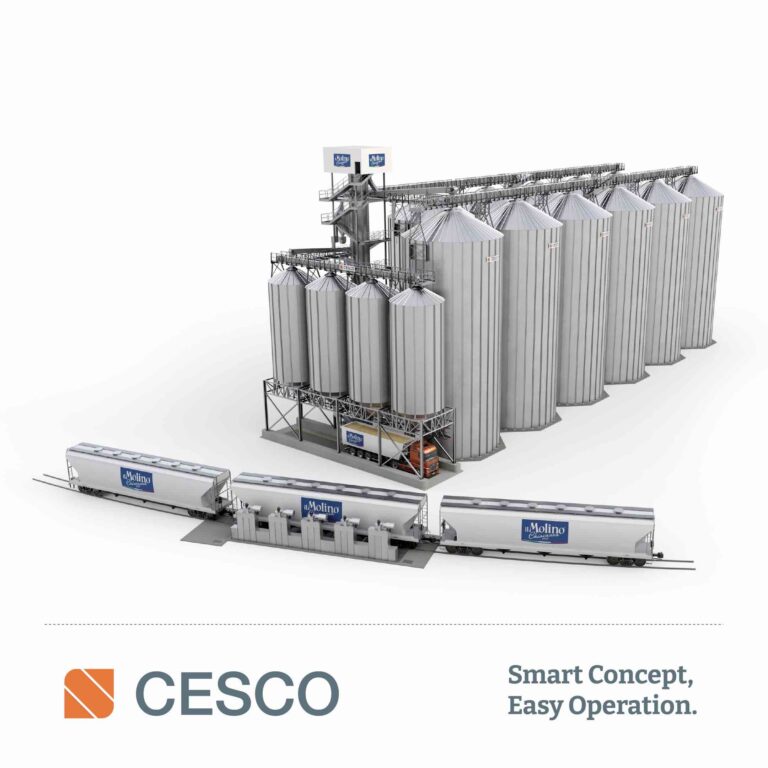
This is what integrated design means in practice. Monitoring, aeration, handling equipment and structure are defined together, in-house, and not added after the silo is built.
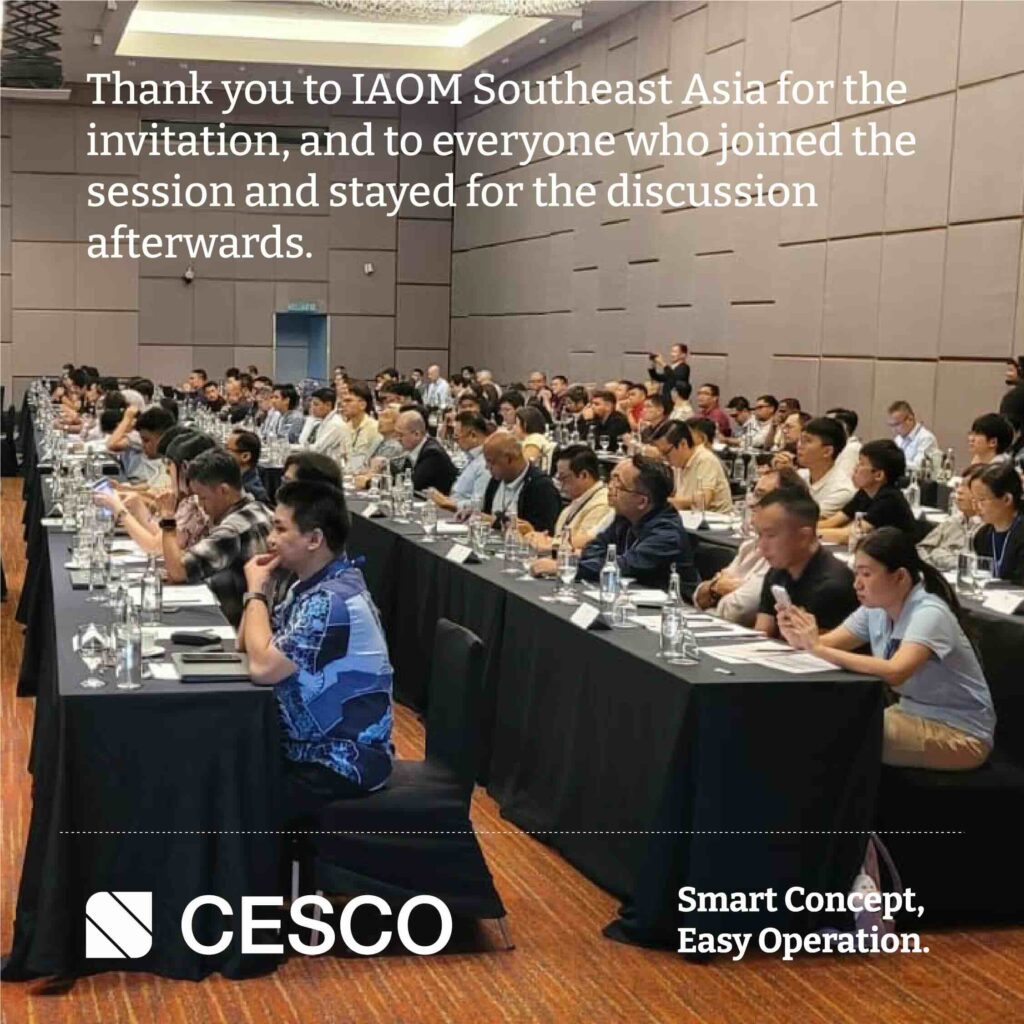
Thank you to IAOM Southeast Asia for the invitation, and to everyone who joined the session and stayed for the discussion afterwards.
Missed the session? Message us here and we will share the key points of Stefano’s presentation.