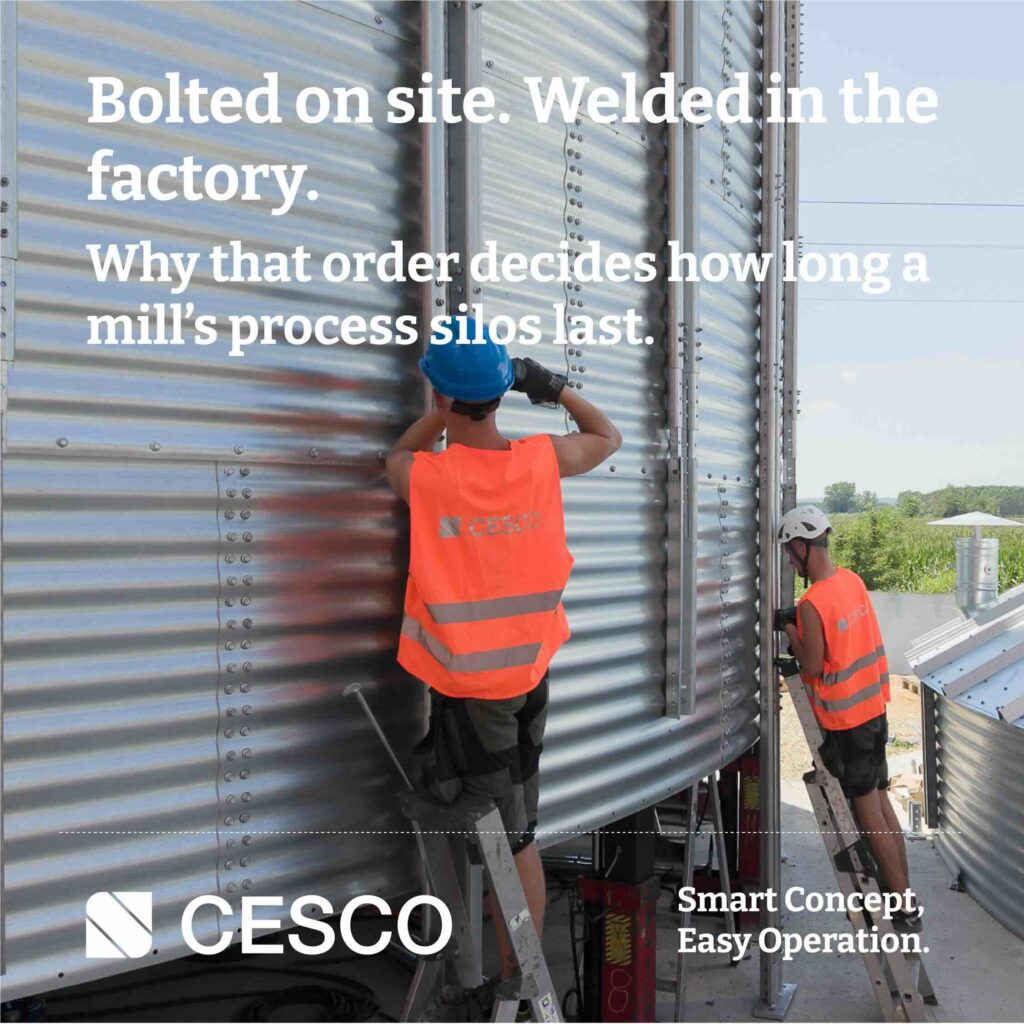
Bolted on site. Welded in the factory. Why that order decides how long a mill’s process bins last.
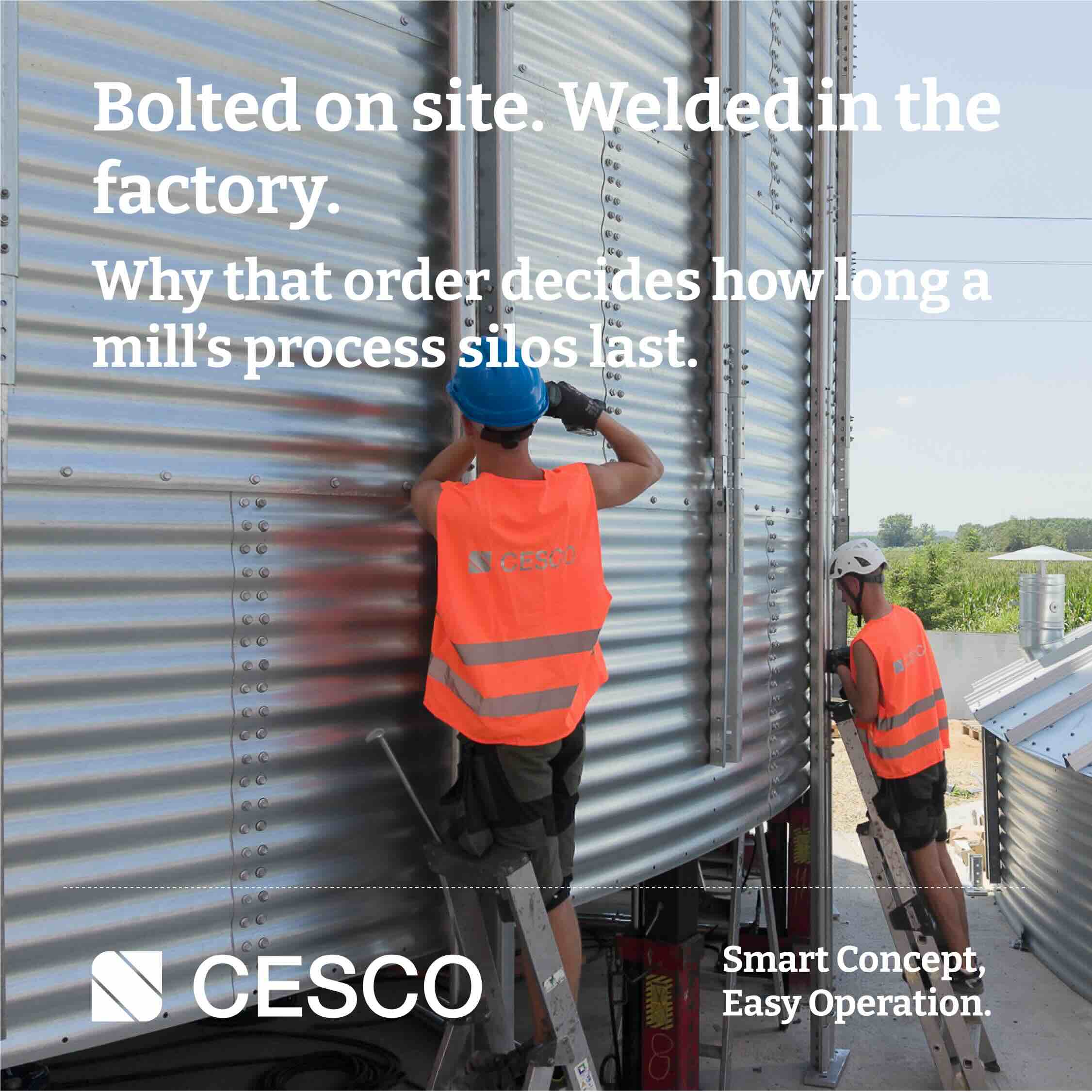
On a milling plant, the weakest point of a process silo is rarely the steel. It is the weld made on site.
Welding on site burns through the zinc coating. It introduces heat deformation and stress into the sheet. And it leaves a surface that has to be repaired by hand, often outdoors, often under schedule pressure.
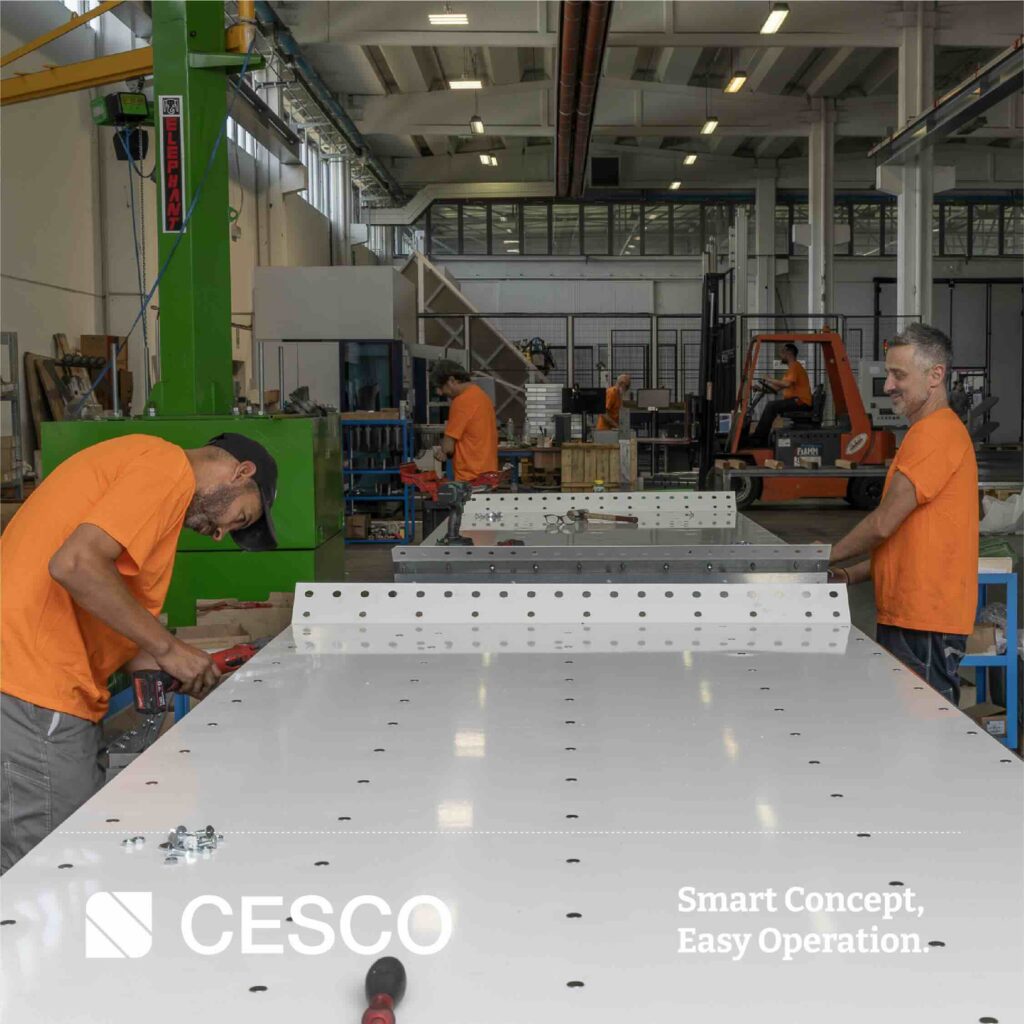
That is why CESCO EPC moves this work off the construction site and into our 5.000 m² facility in Italy.
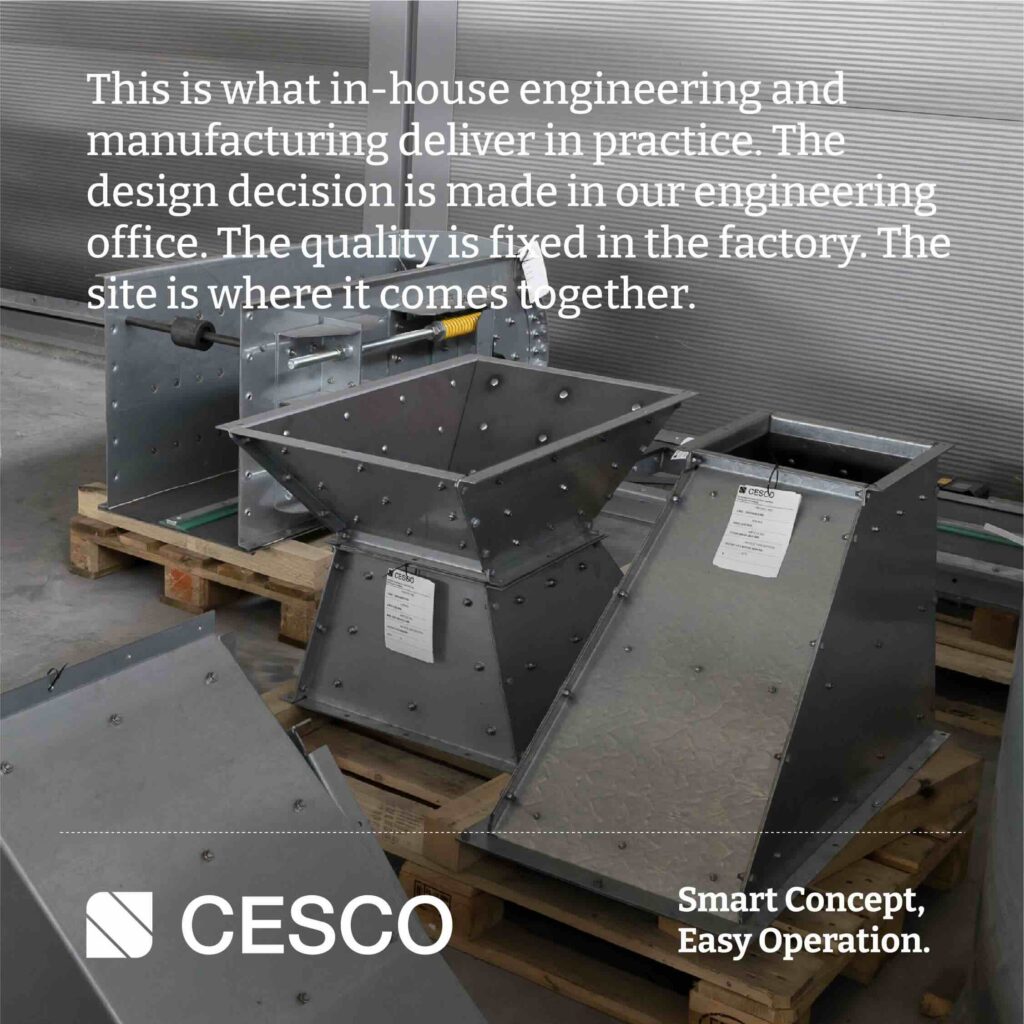
Our process bins are almost entirely bolted. The only welded sections, the final part of the outlets, are completed in the factory by specialized personnel before coating. On site, the team assembles pre-drilled, pre-coated modules.
The same logic shapes the details:
☑️ Countersink holes made during automated punching, so screw heads sit flush with smooth silo walls.
☑️ Rounded inner corners formed by two 135° bends (approx. R225–R250, per Bühler specifications), integrated into the sheet and bolted, not welded in place.
☑️ Galvanized sheets at Z450 minimum, up to Z600, and hot-dip galvanized profiles at Z900 minimum.
What does this mean for the plant owner?
1️⃣ Faster assembly, because modules arrive ready to bolt.
2️⃣ Lower transport costs, because pre-manufactured modules stack into compact packages.
3️⃣ Fewer surfaces where product can accumulate, which matters for hygiene in a flour mill.
4️⃣ A coating that stays intact through transport, erection, and operation.
This is what in-house engineering and manufacturing deliver in practice. The design decision is made in our engineering office. The quality is fixed in the factory. The site is where it comes together.
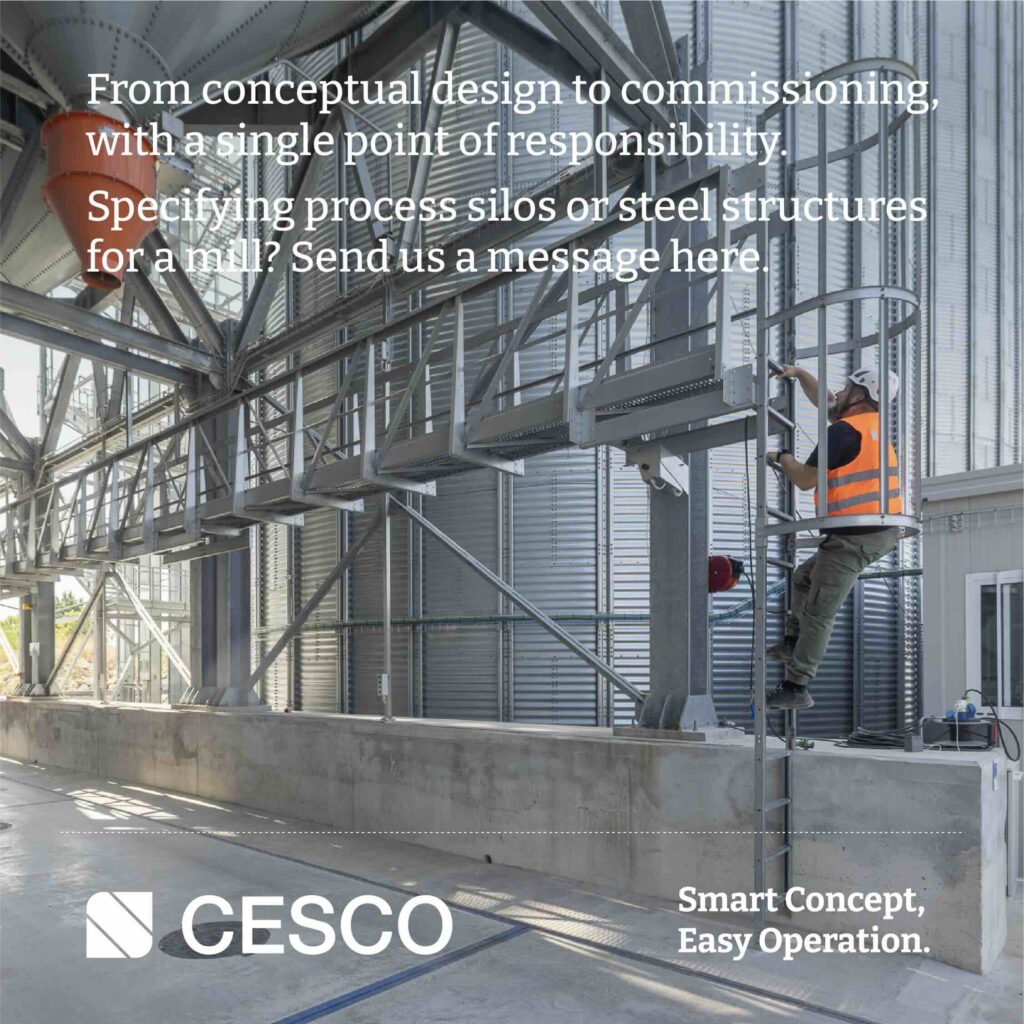
From conceptual design to commissioning, with a single point of responsibility.
Specifying process bins or steel structures for a mill? Send us a message here