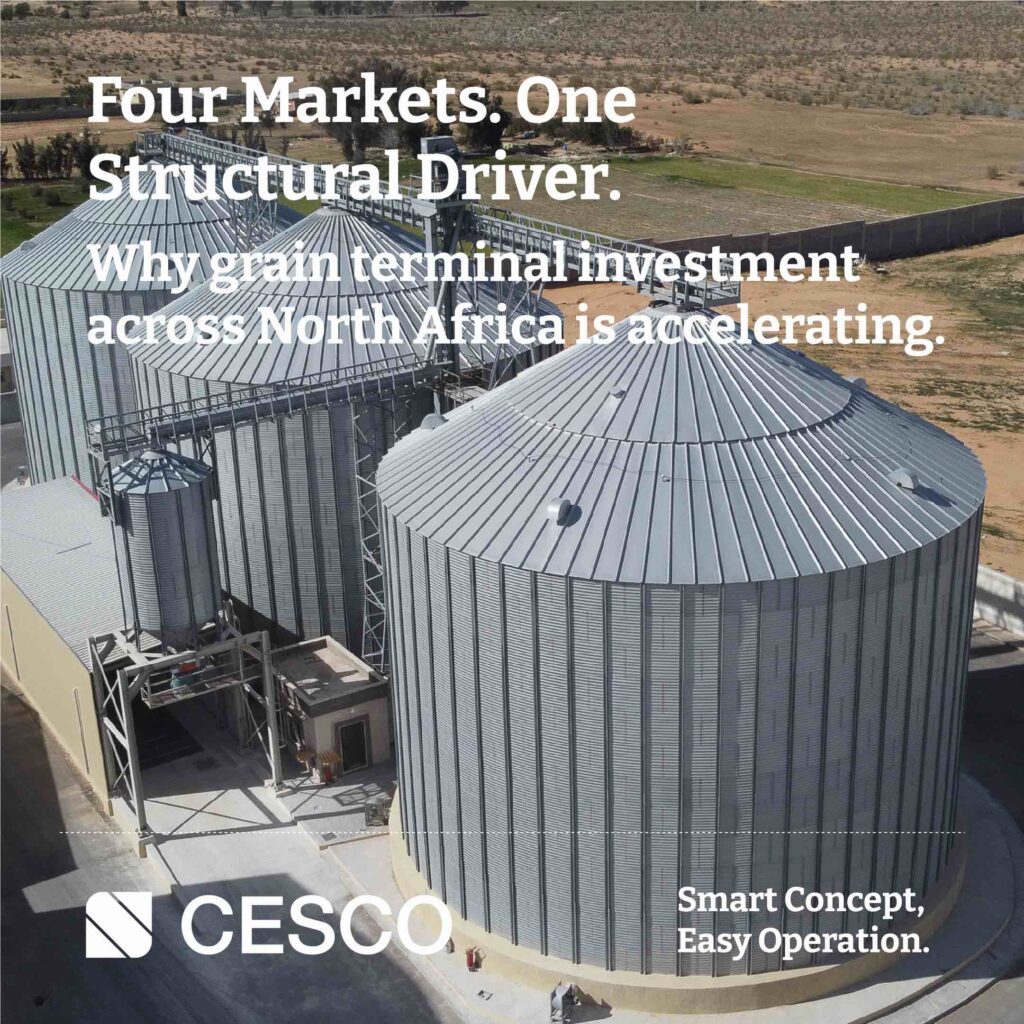
Four Markets. One Structural Driver. Why grain terminal investment across North Africa is accelerating now.
North Africa runs on imported grain.
Egypt, Algeria, Morocco, Tunisia: each country imports the majority of the wheat that feeds its population. These are not markets with marginal exposure to global commodity price swings. They are structurally dependent on uninterrupted supply chains spanning multiple oceans and logistics corridors.
That dependency creates political pressure that does not go away.
What has changed is the response. Governments across the region are investing in grain storage and handling capacity not as a legacy infrastructure obligation, but as a strategic tool, the mechanism that converts a stable year on world markets into a reliable supply for a country of forty, eighty, or one hundred million people.
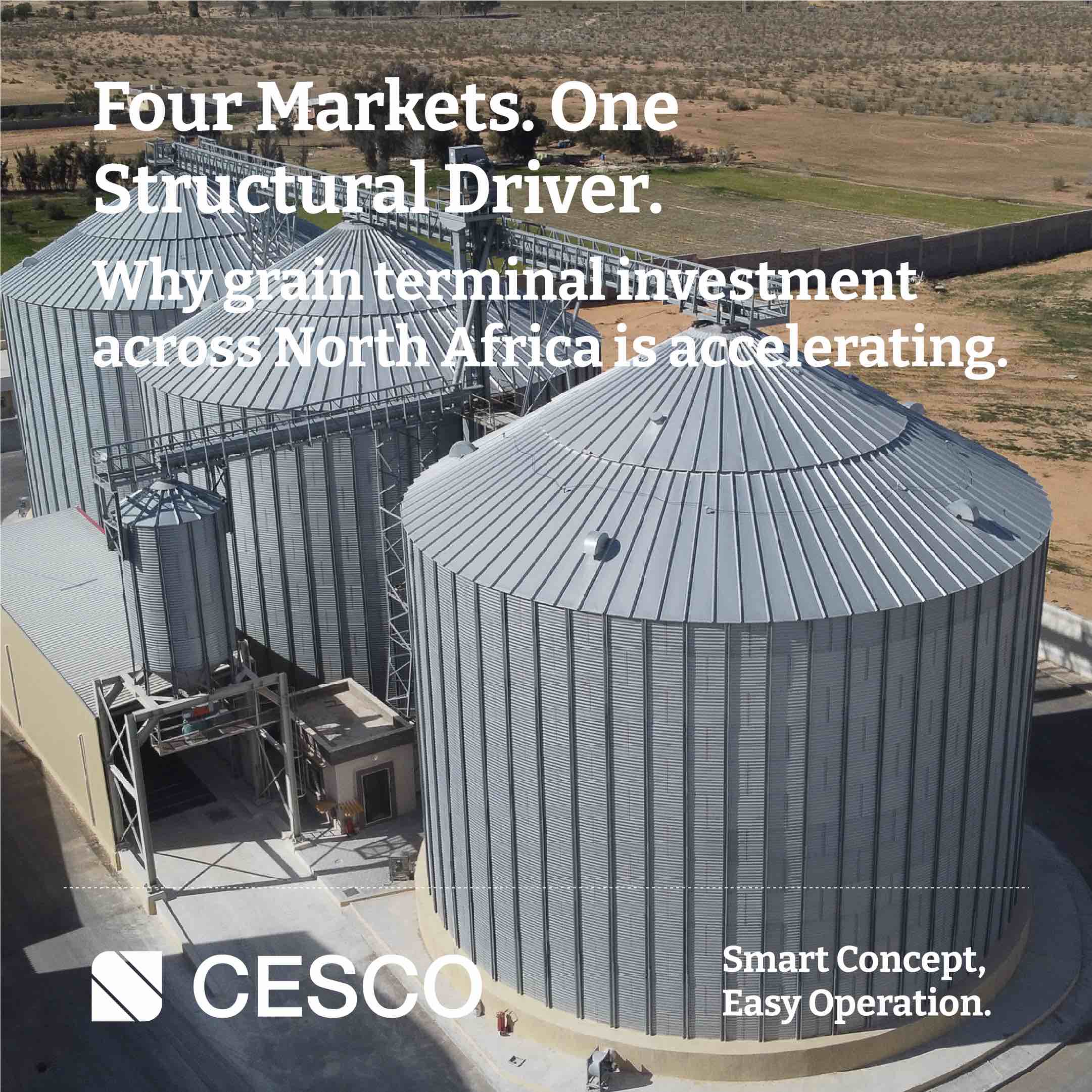
At port level, this means terminal capacity designed to receive larger vessels faster. Inland, it means distributed storage that brings grain closer to the mills and the populations they serve.
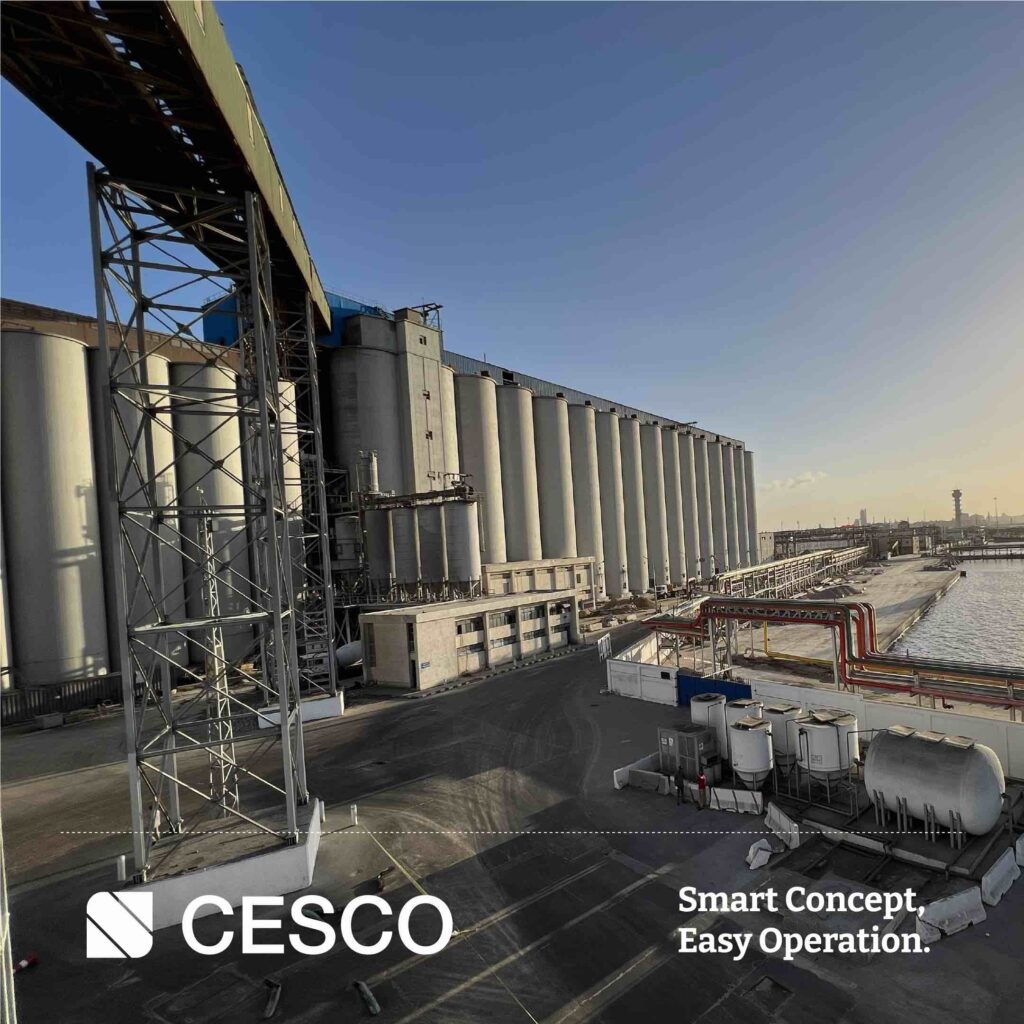
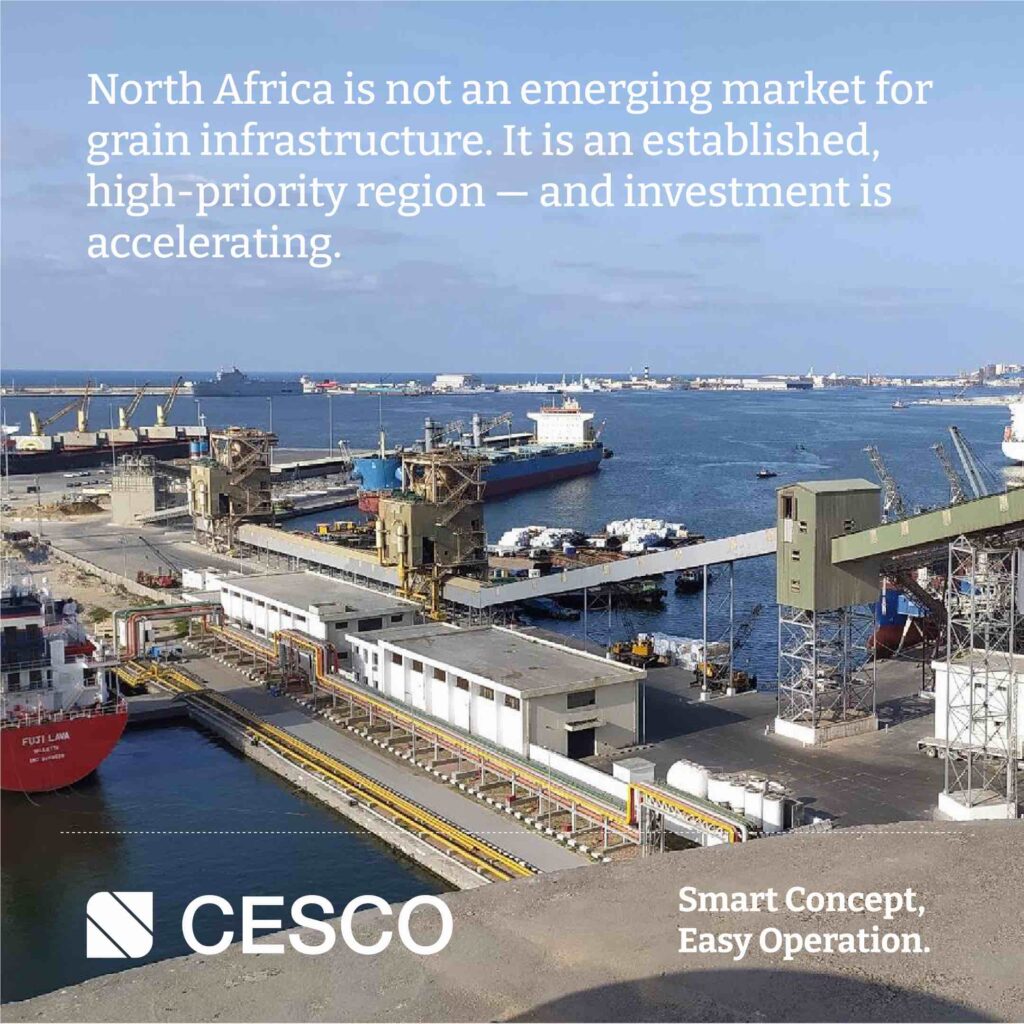
CESCO EPC has delivered grain infrastructure across this region for more than two decades. In Egypt alone, our work spans port terminal rehabilitation at the Port of Alexandria, a 100.000 tonne facility, integrated wheat and maize flour milling plants in the Nile Delta, and receiving systems for some of the country’s most demanding grain handling operations.
The engineering requirements here are specific. Port infrastructure must be designed for high-throughput operations: integrated cleaning systems, automated aeration, and continuous temperature and moisture monitoring.
North Africa is an established, high-priority region, and investment is accelerating.
Starting a new project in North Africa? contact us here